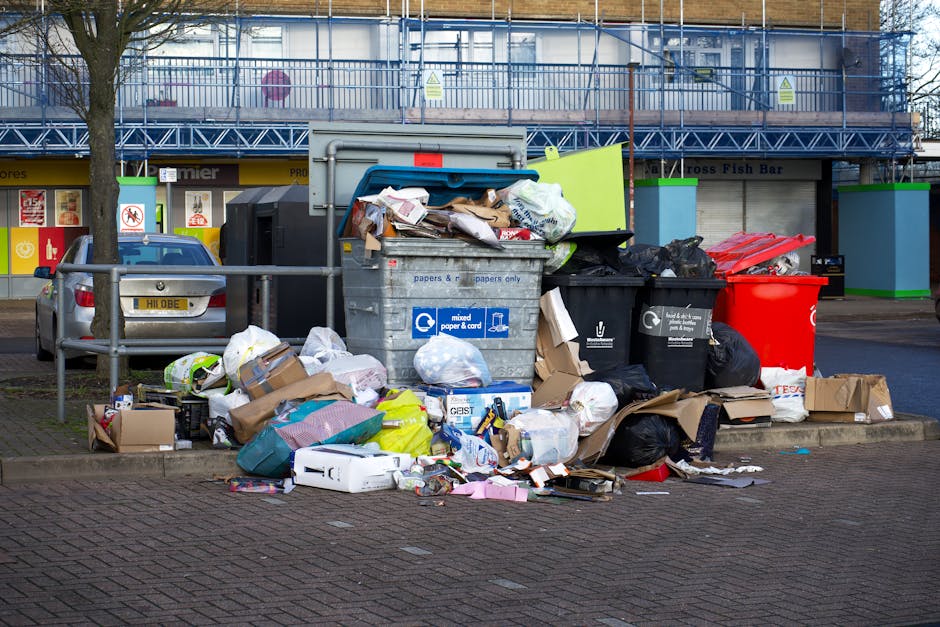
Elephant and Castle station bulky rubbish pickup options: a practical guide for quick, safe, local clearance
If you are staring at a worn-out sofa, a broken wardrobe, or a pile of mixed clutter and wondering how to shift it near Elephant and Castle station, you are not alone. The phrase Elephant and Castle station bulky rubbish pickup options covers a few different ways to get large, awkward waste removed without turning your week into a wrestling match with bins, lifts, and stairwells. Truth be told, bulky rubbish tends to appear at the worst possible moment: after a flat move, a renovation, a clear-out, or one of those "we should really deal with this" weekends.
This guide explains what your main options are, how each one works, what to watch out for, and how to choose the best route for your situation. It also gives you a simple step-by-step approach, a comparison table, and a checklist you can actually use. If you want a clearer route through the mess, you are in the right place.
For readers who may need broader clearance support beyond one-off pickup, services such as waste removal and furniture disposal can be useful alongside bulky item collection, especially when the load is too awkward for a standard bin lift.
Table of Contents
- Why Elephant and Castle station bulky rubbish pickup options matters
- How Elephant and Castle station bulky rubbish pickup options works
- Key benefits and practical advantages
- Who this is for and when it makes sense
- Step-by-step guidance
- Expert tips for better results
- Common mistakes to avoid
- Tools, resources and recommendations
- Law, compliance, standards, or best practice
- Options, methods, or comparison table
- Case study or real-world example
- Practical checklist
- Conclusion
- Frequently Asked Questions
Why Elephant and Castle station bulky rubbish pickup options Matters
Bulky rubbish is not just "more rubbish." It is usually heavier, harder to carry, and more annoying to store than ordinary household waste. A sagging mattress, an old fridge, a damaged desk, or a stack of renovation offcuts can take over a hallway in no time. Near a busy transport hub like Elephant and Castle station, that creates practical problems fast. Narrow pavements, flats with shared entrances, and limited loading space make DIY disposal harder than people expect.
Why does this matter so much? Because the wrong disposal method can waste time, increase lifting risks, and lead to extra costs if you end up needing a second trip. It can also cause avoidable stress in shared buildings. If you live in a flat, for example, one large item left in a communal area can quickly become everyone's issue. Not ideal, and frankly a bit awkward.
There is also a sustainability angle. The best pickup option is not always the fastest-looking one. A responsible service should sort items for reuse, recycling, or disposal where appropriate, rather than simply tipping everything into one load. If you care about that balance, the company's approach to recycling and sustainability is worth checking alongside the practical side of the job.
Expert summary: The best bulky rubbish pickup option is the one that matches the type of waste, the access to your property, and the amount of lifting you can reasonably avoid. Speed matters, but safe removal matters more.
How Elephant and Castle station bulky rubbish pickup options Works
In simple terms, bulky rubbish pickup is the organised removal of large items that do not fit into normal household bins. That might include furniture, appliances, general junk, garden waste, office items, or mixed clear-out debris. The process usually follows a fairly familiar pattern, though the details vary by provider.
Typical workflow
- You describe the items, access points, and approximate volume.
- A provider gives guidance or a price based on the load and labour involved.
- You agree a collection time that works around your schedule.
- The team arrives, removes the items, and loads them safely.
- The waste is sorted for recycling, donation, or disposal where possible.
That sounds straightforward, and sometimes it is. But the real-world bit is in the details. Is there a lift? Are there parking restrictions? Are the items in a basement storage room? Is the waste mixed with broken glass, paint tins, or sharp edges? These things affect the way pickup is planned.
For more complex jobs, a wider clearance service may be more suitable than a single-item collection. A packed flat, a loft that has become a time capsule, or a garage that has slowly turned into a small museum of broken stuff may benefit from flat clearance, loft clearance, or garage clearance.
There is also a difference between "pickup" and "clearance." Pickup often means the removal of a defined item or small load. Clearance usually means removing several items, often from inside a property, with sorting and loading handled for you. That distinction matters when you are comparing quotes.
Key Benefits and Practical Advantages
The main advantage of a bulky rubbish pickup is obvious: you do not have to shift awkward, heavy items yourself. But the better options give you more than muscle. They save time, reduce hassle, and help you avoid the classic mistakes that come from trying to improvise with a car boot and a bit of optimism.
What good pickup options can give you
- Less lifting and less risk when items are too heavy or awkward for one person.
- Faster turnaround than waiting for a self-managed trip to a disposal site.
- Better access handling for stairwells, shared corridors, and tight entrances.
- Cleaner sorting of reusable, recyclable, and residual waste.
- More predictable planning because the provider knows what they are collecting.
In a busy area, that convenience often matters as much as the removal itself. Let's face it, very few people enjoy trying to manoeuvre a mattress through a hallway at 7.30 on a Monday morning while someone else is trying to leave for work.
Another practical benefit is peace of mind. If the collection is handled by a team that understands access, safety, and responsible disposal, you spend less time worrying about whether the job will be finished properly. If you want that reassurance, looking at a provider's about us information and insurance and safety details is a sensible habit.
Who This Is For and When It Makes Sense
Bulky rubbish pickup is useful for all sorts of people, not just households doing a big spring clean. In practice, the most common users are people who need a clean, reliable way to clear space without hiring a van or doing repeated trips.
It usually makes sense for:
- Residents replacing old furniture or appliances
- People moving out of a flat and needing a fast turnaround
- Landlords dealing with leftover items after a tenancy
- Homeowners clearing a loft, garage, garden, or spare room
- Small businesses removing office furniture or unwanted stock
- Tradespeople dealing with leftover building waste
For business premises, a dedicated business waste removal service may fit better than a household pickup, especially if you need regular or larger-volume collection. Similarly, if the waste came from a refurbishment, builders waste clearance is often the more practical route.
There is also a point where DIY starts to look false-economy-ish. If you would need to borrow a van, recruit a friend, find a parking spot, and make several heavy lifts, the "cheap" option can become the expensive one. That is usually the moment people stop and say, right, enough.
Step-by-Step Guidance
If you want to choose the right option without overthinking it, use this simple process.
1) Make a clear list of what needs removing
Start with the obvious items first. Sofa, wardrobe, mattress, desk, broken shelves, old carpet, garden waste, or cardboard? Write it down. Mixed loads are common, and a clear list helps avoid misunderstandings later.
2) Check access before you book
Measure doorways if needed. Note whether there is a lift, any stairs, loading restrictions, or narrow access. In a station-adjacent area, parking and time windows can affect collection, so be upfront. It saves a lot of back-and-forth.
3) Separate special items
Some waste types need different handling. That includes electrical items, sharp materials, and anything potentially hazardous. If you are not sure, mention it. A good provider would rather know early than be surprised on arrival.
4) Compare the real scope, not just the headline price
Two quotes can look similar on paper and still be miles apart in value. Check whether labour, loading, disposal, and access assumptions are included. It is worth asking what happens if the load turns out bigger than expected.
5) Book a collection window that fits your building
Try to avoid the school-run rush, peak commuter times, or the exact moment a neighbour is moving a wardrobe down the same corridor. A little timing discipline goes a long way.
6) Prepare the items for easy removal
Clear a path, keep hallways tidy, and gather smaller loose pieces together. You do not need to do the heavy lifting yourself, but a tidy setup helps the crew work faster and more safely.
7) Ask about the end destination
Good providers should be comfortable explaining whether items are reused, recycled, or disposed of. If sustainability matters to you, this is a fair question. Not pushy, just sensible.
Expert Tips for Better Results
After enough clear-outs, a few patterns become obvious. The people who get the smoothest experience usually do three or four small things well.
- Send photos where possible. A few honest pictures can prevent bad assumptions.
- Describe stairs, lifts, and parking clearly. Access is often the difference between a tidy collection and a tricky one.
- Group items by room or type. It makes loading quicker and easier to check.
- Keep an eye on mixed waste. Furniture, garden waste, and builders' debris may need separate handling depending on the load.
- Ask about payment and timing early. A good provider should explain this plainly, which is why payment and security information can be useful before you commit.
A small but helpful habit: set aside one corner or one room as the "go pile" before collection day. It sounds almost too simple, but it cuts confusion. Less wandering around. Less "is this going too?" More done, less faff.
If you are dealing with a particularly full property, consider whether a broader service like home clearance or house clearance would be easier than piecemeal pickup. Sometimes one coordinated visit is just cleaner.
Common Mistakes to Avoid
Most bulky rubbish problems are avoidable. The tricky part is that people only realise this after the fact. Here are the usual slip-ups.
1) Underestimating volume
One sofa turns into a sofa, two armchairs, a footstool, and a pile of cushions nobody wanted to talk about. Be realistic. A small estimate error can change the cost or require another visit.
2) Forgetting access issues
Many delays happen because the team cannot get the item out quickly. Narrow staircases, lift restrictions, or difficult parking should be mentioned in advance. It is not nitpicking; it is the job.
3) Leaving sorting until the last minute
Mixing recyclable items, general waste, and reusable furniture can complicate collection. If you can separate them, do it. Even a small amount of sorting helps.
4) Ignoring building rules
Some blocks have specific collection times or loading requirements. If you do not check, you may end up doing everything twice. Not fun.
5) Choosing purely on speed
Fast is useful, but not if the service is vague or poorly organised. You want quick and clear, not quick and confusing. There is a difference.
Tools, Resources and Recommendations
You do not need a truckload of tools to get bulky rubbish picked up, but a few simple things make the process easier and safer.
- Tape measure: handy for checking whether furniture will fit through doors or hallways.
- Phone camera: useful for taking accurate photos of the load and access route.
- Labels or notes: help you separate what is staying from what is going.
- Protective gloves: useful if you are moving smaller loose items before collection.
- Clear pathing: not a tool as such, but it might be the biggest time-saver.
From a service perspective, it helps to review practical pages that explain scope and expectations. For example, furniture clearance can be relevant when the main load is sofas, tables, beds, or wardrobes, while office clearance suits desks, chairs, filing units, and commercial interiors. If the source is a neglected outdoor corner, garden clearance may be the better fit.
If you want a deeper look at how a provider handles customer care and company standards, the complaints procedure and terms and conditions pages can also tell you a lot about how seriously they take the service. A bit dry, yes, but useful.
Law, Compliance, Standards, or Best Practice
Bulky rubbish pickup is not just about convenience. In the UK, waste handling should be done responsibly, and that means using a provider that follows sensible waste transfer, sorting, and safety practices. You do not need to become a compliance expert, but you should expect a professional approach.
At a practical level, that means the waste should be carried, loaded, and moved safely; the provider should understand what can and cannot be mixed; and items should be disposed of or recycled through appropriate routes. If you are using a clearance company, it is reasonable to ask how they handle recycling, what happens to reusable goods, and how they manage items that need special care.
Best practice also includes:
- clear item descriptions before collection
- transparent pricing where possible
- safe lifting and loading methods
- proper insurance and operational awareness
- responsible disposal rather than guesswork
If a job involves the contents of a rental property, a business site, or a renovation area, extra care is sensible. In those cases, a provider with experience in house clearance, office clearance, or builders waste clearance is usually better placed to handle the different waste streams properly.
And a small reality check: if a quote sounds too vague to be true, it often is. Ask questions. Clear answers are a good sign.
Options, Methods, or Comparison Table
There is no single best answer for everyone. The right choice depends on what you are throwing away, how much there is, and how quickly you need it gone. Here is a simple comparison of the most common approaches.
| Option | Best for | Pros | Trade-offs |
|---|---|---|---|
| Single-item bulky pickup | One or two large items | Quick, straightforward, low effort | Not ideal for mixed or large loads |
| Household clearance service | Several items from a home or flat | Handles labour, loading, and sorting | Usually more involved than a simple pickup |
| Furniture-focused removal | Sofas, beds, wardrobes, tables | Efficient for large domestic pieces | May not suit mixed waste loads |
| Builders or renovation clearance | Plaster, timber, rubble, offcuts | Better suited to construction waste | May need clearer item separation |
| Business waste removal | Office or commercial items | Good for desks, chairs, stock, and fixtures | Best when the load is business-related |
If you are unsure, ask yourself one question: is this mostly one item, or is it a proper clear-out? That answer usually points you in the right direction.
Case Study or Real-World Example
Here is a very typical local scenario. A tenant in a flat near Elephant and Castle station has just upgraded their furniture and needs to remove an old mattress, a two-seater sofa, a cracked coffee table, and a couple of broken storage boxes. At first glance, it looks like a simple job. Then the details appear: third floor, narrow stairs, no parking outside for long, and only an hour available before the next handover appointment.
In that situation, the smartest option is usually a planned bulky pickup rather than trying to do it in bits. The tenant can group the items, clear the hallway, take a few photos, and book a collection with access details included. The crew arrives, removes the load in one visit, and the flat is ready without a last-minute scramble. Simple enough. Not glamorous, but very satisfying.
Now compare that with a garage clearance where the actual issue is not one large item but a slow build-up of old equipment, tins, bags, and a broken bike. That becomes a different job altogether. A broader garage clearance or even a more general waste removal booking would usually make more sense. Same area, different problem, different solution.
Practical Checklist
Use this before you book.
- Have I listed every bulky item clearly?
- Do I know whether the waste is furniture, household junk, builders' waste, or a mix?
- Have I checked stairs, lifts, and parking access?
- Are there any heavy, sharp, or awkward items that need special mention?
- Have I compared what is included in the price?
- Do I know when the collection needs to happen?
- Have I prepared a clear path to the items?
- Do I need a wider service such as flat, home, or office clearance?
- Have I asked about reuse and recycling?
- Have I read the provider's service and safety information?
One more small thing: if you are in any doubt, over-explain rather than under-explain. It saves time later. Always does.
Conclusion
Choosing between the available Elephant and Castle station bulky rubbish pickup options comes down to three things: what you need removed, how easy it is to access, and how much help you want with the lifting and disposal side. A simple item pickup works for one-off loads. A more complete clearance is better when the waste is mixed, plentiful, or awkward. And the best service is usually the one that makes the process feel calm instead of chaotic.
Take a little time to describe the items well, check access details, and choose a provider that is clear about safety, pricing, and responsible disposal. That tiny bit of preparation makes the whole experience smoother. Less stress, fewer surprises, and a cleaner space at the end of it. Which, to be fair, is the point.
Get a free quote today and see how much you can save.
And if you are standing in a room full of clutter right now, don't worry. It starts with one item, then another, and before long the space feels like yours again.
Frequently Asked Questions
What counts as bulky rubbish near Elephant and Castle station?
Bulky rubbish usually means items too large or awkward for normal household bins, such as sofas, wardrobes, mattresses, tables, appliances, and mixed household clutter. In some cases, it can also include garden waste, office furniture, or renovation debris.
Is bulky rubbish pickup better than doing it myself?
It depends on the load. If you only have one small item and easy access, DIY might work. If you have stairs, a tight hallway, limited parking, or several heavy pieces, a pickup service is often safer and less stressful.
How quickly can bulky rubbish be collected?
That varies by provider and schedule. Some jobs can be arranged quite quickly if access is straightforward and the load is clear. If the collection is more complex, you may need a slightly wider time window.
Do I need to separate furniture from general rubbish?
It is usually a good idea, yes. Separating furniture, general junk, and any special waste helps the collection go more smoothly and can make sorting for recycling easier.
What should I tell the provider before booking?
Give a clear list of items, note any stairs or lift access, mention parking restrictions, and say whether the load is mixed or includes anything awkward. Photos are often helpful too.
Can bulky rubbish pickup handle flats and upper floors?
Yes, but access matters. Flats, stairs, and shared entrances are common in London, so the provider needs to know the layout in advance. That is especially true for busy buildings near transport hubs.
Is there a difference between furniture clearance and bulky rubbish pickup?
Yes. Furniture clearance is focused on large household items like beds, sofas, and wardrobes. Bulky rubbish pickup can be broader and may include mixed waste or additional items beyond furniture.
What happens to the waste after collection?
It should be sorted for reuse, recycling, or disposal depending on the item type and condition. Responsible handling is one of the signs of a professional service.
How can I avoid unexpected charges?
Be accurate about the amount of waste, share photos if possible, and explain access clearly. The more complete the picture, the less chance there is of a mismatch between the quote and the job.
Do I need a different service for builders' waste?
Usually yes. Builders' waste can include materials such as timber, rubble, or plasterboard offcuts, so it is better to use a service designed for that type of load rather than a general household pickup.
What if I have more than just one room to clear?
If the job extends beyond a few bulky items, a broader clearance service may be more suitable. Home clearance, flat clearance, loft clearance, or office clearance can be a better fit than a simple pickup.
Why does access matter so much for bulky item collection?
Because large items are heavy, awkward, and often difficult to manoeuvre. Stairs, narrow corridors, and tight parking can slow the job and affect how the collection is planned. Good access info makes everything easier.